Hantavirus is one of the world’s rare but highly dangerous viral infections, known for its rapid progression and high fatality rate in severe cases. While infections remain uncommon, outbreaks and isolated cases often generate widespread concern because the virus can move silently through the body for days or even weeks before symptoms become severe.
Recent global attention on hantavirus has reignited questions about how the disease develops inside the human body, how long symptoms take to appear, and why some patients deteriorate so quickly. Medical experts explain that hantavirus does not usually kill immediately after infection. Instead, it follows a complex progression that can range from mild flu-like illness to life-threatening respiratory or kidney failure within a relatively short period.
Understanding the timeline of hantavirus infection is critical because early recognition and medical intervention can significantly improve survival chances.
What Is Hantavirus?
Hantavirus refers to a group of viruses primarily carried by rodents. Humans become infected through exposure to contaminated rodent urine, saliva, droppings, or particles released into the air from dried waste materials.
The virus is not commonly transmitted between humans, although rare human-to-human transmission has been documented with the Andes strain in parts of South America.
Different strains of hantavirus cause different illnesses across the world. In the Americas, the infection is most commonly associated with Hantavirus Pulmonary Syndrome (HPS), also called Hantavirus Cardiopulmonary Syndrome (HCPS), which affects the lungs and heart. In Europe and Asia, the virus more commonly causes Hemorrhagic Fever with Renal Syndrome (HFRS), which primarily affects the kidneys and blood vessels.
Although rare, hantavirus infections can be extremely serious. Some strains linked with pulmonary syndrome have fatality rates approaching 40–50 percent in severe cases.
How Long Does Hantavirus Stay Hidden in the Body?
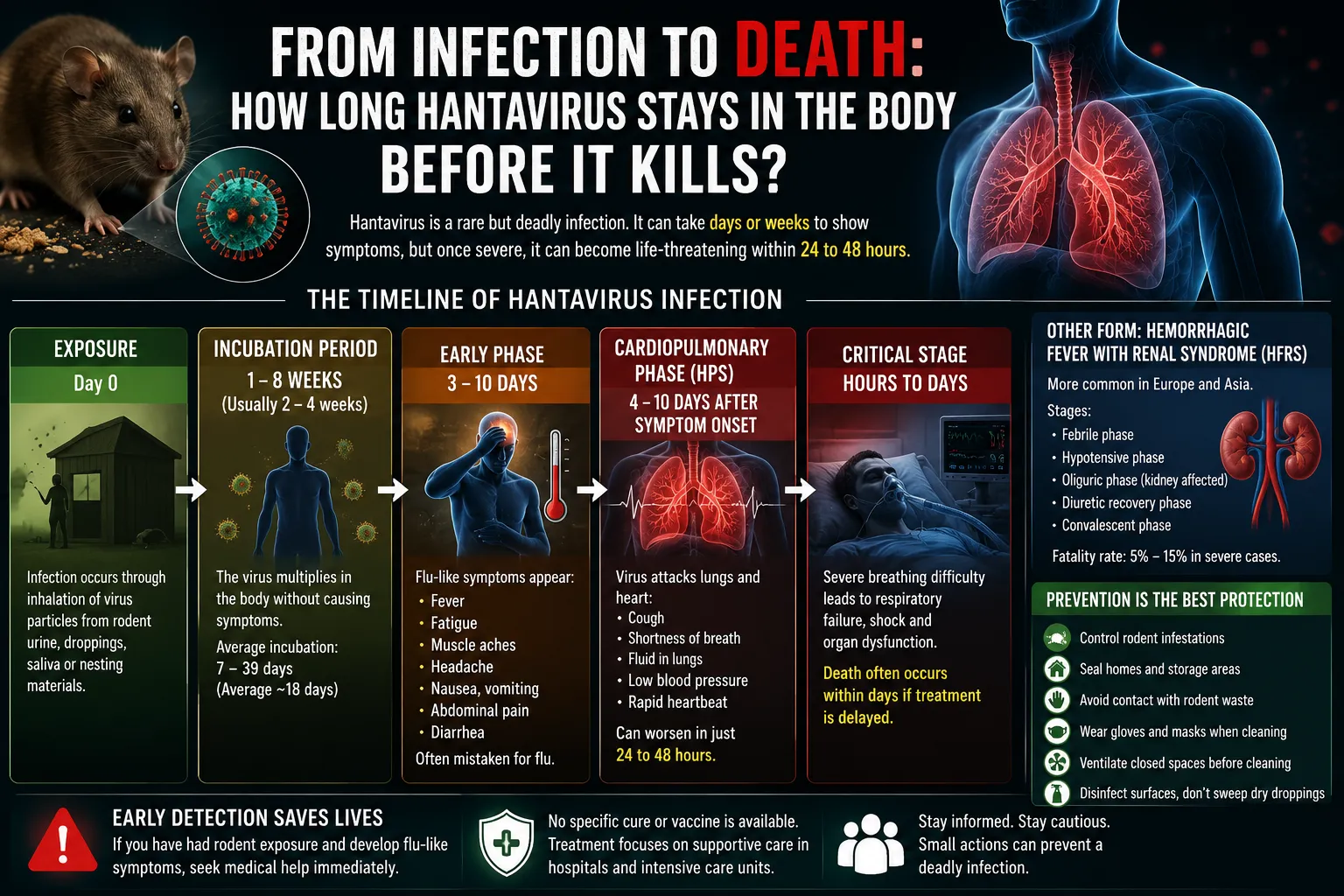
One of the most concerning aspects of hantavirus infection is its long incubation period. After exposure to the virus, symptoms do not appear immediately.
Medical authorities including the World Health Organization and the Centers for Disease Control and Prevention state that symptoms typically emerge anywhere between one and eight weeks after exposure. However, many cases tend to develop symptoms within two to four weeks.
Researchers studying outbreaks of Andes virus found incubation periods ranging from 7 to 39 days, with an average of around 18 days.
During this incubation stage, the virus begins multiplying inside the body without causing visible symptoms. By the time illness becomes noticeable, significant viral activity may already be underway.
The Early Phase: Symptoms Often Feel Like Flu
The first stage of hantavirus illness is often difficult to identify because the symptoms resemble common viral infections such as influenza.
Early symptoms may include:
-
Fever
-
Fatigue
-
Muscle aches
-
Headache
-
Chills
-
Nausea
-
Vomiting
-
Abdominal pain
-
Diarrhea
Doctors note that severe muscle pain, especially in the thighs, hips, and back, is commonly reported in hantavirus pulmonary syndrome.
This early phase can last anywhere from three to ten days. Many patients initially believe they are suffering from seasonal flu or food poisoning.
Unfortunately, this delay in recognizing the disease can be dangerous because hantavirus often worsens suddenly after the initial symptoms appear to stabilize.
When the Virus Turns Deadly
For patients who develop Hantavirus Pulmonary Syndrome, the illness can rapidly progress into a severe cardiopulmonary phase.
Typically, four to ten days after the first symptoms begin, the virus starts affecting the lungs and cardiovascular system aggressively.
At this stage, patients may develop:
Persistent coughing
Shortness of breath
Fluid accumulation in the lungs
Chest tightness
Rapid heartbea
Low blood pressure
Doctors explain that the lungs can begin filling with fluid, making breathing extremely difficult. In severe cases, patients may quickly develop respiratory failure and shock.
This progression is often sudden. Some patients who appear stable in the morning may require intensive care support by evening.
Medical experts say the most dangerous phase of the disease may unfold within just 24 to 48 hours once respiratory symptoms begin.
How Long Does It Take Before Death Occurs?
There is no fixed timeline for hantavirus fatalities because disease severity varies depending on the viral strain, the patient’s immune response, age, and how quickly medical treatment begins.
However, experts note that deaths in severe HPS cases usually occur during the cardiopulmonary phase, often within days after breathing problems begin.
In many documented cases, patients deteriorate rapidly after developing respiratory symptoms. Without prompt hospitalization and supportive treatment, respiratory failure, shock, and organ dysfunction may become fatal.
The virus itself does not usually remain active indefinitely in the body. Instead, the severe immune response triggered by infection causes widespread inflammation and fluid leakage in the lungs and blood vessels.
This inflammatory reaction is what often leads to life-threatening complications.
The Kidney-Related Form of Hantavirus
In Europe and Asia, hantavirus more commonly causes Hemorrhagic Fever with Renal Syndrome.
This form of the disease follows a somewhat different progression.
After an incubation period of roughly one to eight weeks, patients may suddenly develop fever, headaches, abdominal pain, blurred vision, and low blood pressure. Later stages can involve kidney failure, internal bleeding, and fluid imbalance.
The illness progresses through several stages, including:
-
Febrile phase
-
Hypotensive phase
-
Oliguric phase (reduced urine production)
-
Diuretic recovery phase
-
Convalescent phase
Some severe forms of HFRS carry fatality rates between 5 and 15 percent, though milder strains are far less deadly.
Why Early Detection Matters
One of the biggest challenges with hantavirus is that there is currently no specific antiviral cure approved for widespread treatment.
Doctors mainly rely on supportive care, including:
-
Oxygen therapy
-
Ventilator support
-
Fluid management
-
Blood pressure stabilization
-
Intensive care monitoring
Medical experts repeatedly emphasize that early hospitalization significantly improves survival chances.
Patients who receive medical care before severe respiratory failure develops tend to have better outcomes than those who arrive late in critical condition.
Because the early symptoms resemble common viral illnesses, many infections are initially misdiagnosed.
This is why doctors urge individuals with recent rodent exposure and flu-like symptoms to seek medical evaluation quickly.
Who Faces the Greatest Risk?
People living or working in rodent-prone environments face the highest risk of infection.
Common high-risk situations include:
-
Cleaning closed spaces with rodent infestation
-
Exposure to barns, sheds, basements, or cabins
-
Farming and forestry work
-
Camping in rodent-heavy areas
-
Disturbing rodent droppings during cleaning
Experts warn that sweeping or vacuuming dried rodent waste can release virus-containing particles into the air, increasing the risk of inhalation.
Older adults and individuals with underlying health conditions may face a greater risk of severe complications.
Can People Recover From Hantavirus?
Yes. Recovery is possible, particularly when patients receive intensive medical care early.
Survivors of Hantavirus Pulmonary Syndrome may require weeks of hospitalization and months of physical recovery afterward. Fatigue and weakness can persist long after the infection clears.
Patients recovering from Hemorrhagic Fever with Renal Syndrome may also experience prolonged weakness or kidney-related complications for several weeks or months.
Despite the seriousness of the disease, early intervention remains one of the strongest factors linked to survival.
Prevention Remains the Best Protection
Since there is no universally available vaccine or definitive cure for most hantavirus infections, prevention is considered the most effective defense.
Public health experts recommend:
-
Controlling rodent infestations
-
Sealing homes and storage areas
-
Avoiding direct contact with rodent waste
-
Using gloves and masks while cleaning contaminated spaces
-
Ventilating enclosed areas before cleaning
-
Disinfecting surfaces rather than sweeping dry droppings
-
These measures significantly reduce exposure risk.
Conclusion
Hantavirus is a rare but potentially deadly infection that can remain hidden inside the human body for up to eight weeks before symptoms appear. What begins as a flu-like illness can rapidly escalate into severe respiratory or kidney failure within days.
The danger of hantavirus lies not only in its high fatality rate but also in how quickly patients can deteriorate once severe symptoms begin. In many cases, the most critical stage develops after what initially appears to be a mild viral illness.
Medical experts stress that early recognition, immediate medical attention, and supportive intensive care are crucial for survival. While the virus continues to raise concern during outbreaks, understanding its progression and practicing preventive measures remain the strongest tools in reducing risk and saving lives.
feedopr.com feedopr.com feedopr.com feedopr.com feedopr.com feedopr.com feedopr.com feedopr.com feedopr.com feedopr.com feedopr.com feedopr.com feedopr.com feedopr.com feedopr.com feedopr.com feedopr.com feedopr.com feedopr.com feedopr.com feedopr.com feedopr.com feedopr.com feedopr.com feedopr.com feedopr.com feedopr.com feedopr.com feedopr.com feedopr.com feedopr.com feedopr.com feedopr.com feedopr.com feedopr.com feedopr.com feedopr.com feedopr.com feedopr.com feedopr.com feedopr.com feedopr.com feedopr.com feedopr.com feedopr.com feedopr.com feedopr.com feedopr.com feedopr.com feedopr.com feedopr.com feedopr.com feedopr.com feedopr.com feedopr.com feedopr.com feedopr.com feedopr.com feedopr.com feedopr.com feedopr.com feedopr.com feedopr.com feedopr.com feedopr.com feedopr.com feedopr.com feedopr.com feedopr.com feedopr.com feedopr.com feedopr.com feedopr.com feedopr.com feedopr.com feedopr.com feedopr.com feedopr.com feedopr.com feedopr.com feedopr.com feedopr.com feedopr.com feedopr.com feedopr.com feedopr.com feedopr.com feedopr.com feedopr.com feedopr.com feedopr.com feedopr.com feedopr.com feedopr.com feedopr.com feedopr.com feedopr.com feedopr.com feedopr.com feedopr.com feedopr.com feedopr.com feedopr.com feedopr.com feedopr.com feedopr.com feedopr.com feedopr.com feedopr.com feedopr.com feedopr.com feedopr.com feedopr.com feedopr.com feedopr.com feedopr.com feedopr.com feedopr.com feedopr.com feedopr.com feedopr.com feedopr.com feedopr.com feedopr.com feedopr.com feedopr.com feedopr.com feedopr.com feedopr.com feedopr.com feedopr.com feedopr.com feedopr.com feedopr.com feedopr.com feedopr.com feedopr.com feedopr.com feedopr.com feedopr.com feedopr.com feedopr.com feedopr.com feedopr.com feedopr.com feedopr.com feedopr.com feedopr.com feedopr.com feedopr.com feedopr.com feedopr.com feedopr.com feedopr.com feedopr.com feedopr.com feedopr.com feedopr.com feedopr.com feedopr.com feedopr.com feedopr.com feedopr.com feedopr.com feedopr.com feedopr.com feedopr.com